Monday, July 21, 2008

A Thousand Tarzans


1-Practice-Its obvious but many people claim they want to learn how to play fast guitar but dont put the time in. You get out what you put in! Even if you dont have much time to spare, half an hour a day is enough to help you improve.

2-Focus your practice-You can increase the benefits of your guitar practice exponentially by practicing the same stuff each time. A good way to start this is to choose 4 licks or scales or parts of scales (anything except chords will work just fine), and play through each lick in a loop for 15 minutes. By the end of the FIRST WEEK youll be two or three times as fast as you were with those licks to begin with.

3-Think long term. Focused practice everyday is great, but its even better to have a goal in mind. for example if you want to learn a particular piece, gear your practice toward licks and techniques used in the piece and then dedicate the last 15-20 minutes(depending on how much time you have) to practicing the actual piece. Nothing helps you learn how to play fast guitar and stay motivated more than being able to see your daily progress.

4-Work on legato-Legato actually means smooth, or flowing, but in guitar circles it is the term given to fretting notes with your left hand and making them sound without actually picking anything with your right hand. It could also be called the art of hammering on and pulling off. Excellent practice as it will strengthen your left hand, not only making you faster and smooth, but will improve your vibrato and chord changes too. It just makes your hand fitter! A great way to practice this is to run up and down some scales, but only pick the first note on each string, so you will be hammering on going up and pulling off on the way down. Its tough at first but persevere and you will get rewards!

5-Use a metronome. Other musicians seem to use metronomes with no trouble, but guitarists are allergic to them, or at least seem to be! Ill spell it out - An hour with a metronome does A LOT more good than an hour without. Its simply the best tool for highlighting the weak areas and inefficiencies in your technique. There is a learning curve but stick with it-your playing will change for the better, permanently! Buy one!

6-Use a hard pick. Controversial? I know that people should use whatever pick they want to, but a softer pick WILL slow you down, and a harder one wont. Its simple physics. Most picks have a degree of flexibility, so after picking a note we have to wait for it to return to its proper shape before we pick again, or the note is not picked cleanly. Put it this way-trying to learn how to play fast guitar while using soft picks is like putting bicycle wheels on a Ferrari and then trying to drive fast. Not going to happen!

7- Start slow-Work on something until you can play it with no mistakes at all before you crank up the speed. This will do more for your all round musical skills than just pushing the metronome up a few beats every few minutes. If you move forward before your skills are ready your playing will be very very sloppy, and that will be a real hard habit to get out of!

Hopefully those tips will help you break out of a rut and get your fretboard burning!

Steve Higgins is an accomplished guitarist who enjoys seeing others improve their skill. To check out more tips visit his blog.

latin music artists

The Latin Real Book: C Edition

The only professional-level Latin fake book on the market. Features classic and contemporary salsa tunes, great Brazilian songs, and Latin Jazz classics. Bb and Eb versions contain many horn parts that wouldn't fit in the C version. Like all Sher Music fake books, it features composer-approved transcriptions, easy-to-read calligraphy, and many extras (sample bass lines, chord voicings, drum appendix, etc.) not found in conventional fake books.
Customer Review: Great Fake Book
Good tunes, easy to read charts, spiral bound to lay flat. What more do you need?


Which Musical Instrument is Recommended for Beginners?

*Will the instrument I choose be affordable?

*Which instruments are easy to learn and which are difficult to learn?

*Will it be a quiet instrument or a noisy one?

*If I don't choose a popular instrument will I be able to find a teacher easily?

*Is the musical instrument of my choice popular or is it an instrument that not many people play?

*How much will a lesson cost?

*I want to choose a musical instrument that I can play in a band. What instruments should I choose?

*I want to play a certain type of music. Which musical instruments are suitable for different styles?

In the following article I will be answering all of the above.

Here is a list of musical instruments to choose from listed in popularity, with the number 1 being the most popular:

1) Guitar

2) Piano

3) Keyboard

4) Drums

5) Violin

6) Cello

7) Flute

8) Saxophone

9) Clarinet

10) Trumpet/Cornet

11) Trombone

12) French Horn

13) Banjo

14) Recorder

15) Viola

16) Tuba

17) Oboe

You can see a list of all musical instruments here:
Musical Instrument Shop. Lots of information and choice. Buy Musical Instruments here

Will the instrument I choose be affordable?

If you want to buy a musical instrument but don't wont to spend too much money I would choose either a guitar, keyboard, violin, clarinet or trumpet. These instruments are the
cheapest to buy when starting out.

Which musical instruments are easy to learn and which are difficult to learn?

The easiest musical instruments to learn from the list above are: Guitars, Drums and Recorders.

Guitar

The guitar should be easy to pick a few chords and you can almost start strumming and playing a simple tune from your first lesson. It is best advised to learn the classical guitar first as it has nylon strings and will be easier on the fingers than a steel strung electric or acoustic guitar.

Drums

Drums are fairly easy to learn as well. The important thing is to feel the rhythm, once you have this, everything else should be easy to pick up.

Recorder

The recorder is probably the easiest of all musical instruments to learn. Most children at school take up this instrument before progressing on to the clarinet, flute or saxophone which is much more difficult to learn.

The most difficult musical instruments to learn from the list above are: Oboe, French horn, Trumpet and Piano.

The Oboe

The Oboe is probably the most difficult musical instrument to learn. It is very difficult to even produce a sound at first, let alone a musical note. This instrument can take many years to master

The French Horn

The French horn also takes quite a while to get the hang of. The sound is produced not only by blowing, but by creating an embouchure and buzzing the lips to control the air stream, which in turn creates the correct pitch to produce the note. Then the correct valves that correspond to the right pitch have to be learnt. The hand is also used to help the quality of sound by placing in the bell. Wow! Perhaps this is not a great instrument for beginners!

The Trumpet

The trumpet is considered difficult to learn initially because of the techniques needed (similar to the French horn but without using the hand in the bell). The difficult thing about the trumpet is trying to make a nice sound which can take a few years to perfect.

The Piano

Although it is easy to make a sound on a piano, just by pressing any note you sound like a professional, the piano is very difficult when you need to play more than one note at a time. All the above instruments require you to play just one note at a time but with the piano sometimes you need to use every finger and thumb at the same time!
You also need to learn two different clefs, and to learn to read this at the same time is not easy at first.

Will it be a quiet musical instrument or a noisy one?

Do you have neighbours that don't appreciate music? And they live right next to you with thin walls.
Do you want to play late at night or early in the morning
Are you embarrassed that you are not making a good sound yet, or you don't want people to hear what you are playing.

If any of the above is true, you need a quite musical instrument or at least one that you can play with headphones or adjust the sound electronically.

If you want to learn a quiet musical instrument, then choose one of the following: Guitar, Piano, Keyboard, Recorder, Clarinet or Flute.

The Classical guitar is very quite and delicate but not the electric or acoustic guitar which are very noisy when amplified!

You can plug headphones in to a digital piano or keyboard or you can turn the sound down. This is the ideal instrument to buy if you don't want to make any noise. The acoustic piano (also known as the upright or grand piano) is very noisy and should be avoided if you need some peace.

The Recorder is fairly quiet, apart from the high notes, so this instrument would be ok.
The Clarinet is a fairly quiet instrument. It does really depend on how it is played.
The Flute is also quiet but the sound can be a bit piercing on the higher notes.

If I don't choose a popular musical instrument, will I be able to find a teacher easily?

You can find a musical instrument teacher almost anywhere; there are literally tens of thousands in the UK.
You will almost certainly have no problem finding a teacher if you play the more popular musical instruments: guitar, piano, keyboard, drums or violin.

Is the musical instrument of my choice popular or is it an instrument that not many people play?

Please see the above list of musical instruments. They are listed in order of popularity, number 1 being the most popular instrument.

There are a few guides to find out if a musical instrument is popular. Just look at a symphony orchestra or a wind band and count the number of instruments there are and how many there are of each.
You will find that there are lots of violins and percussion (clarinets and flutes in the wind band case) which means that there is no shortage of people learning these instruments. You will also find that there is only one tuba, one oboe, a few french horns, a few flutes, a few clarinets etc. Of course this is only a guide, as some of the other popular musical instruments such as the guitar, piano and keyboard are not normally found in a symphony orchestra.

How much will a lesson cost?

Individual musical instrument lessons can cost between 8 and 20 for half an hour. Group instrument lessons 5 to 12. Popular musical instruments are normally cheap than not so popular instruments, normally because there is no shortage of teachers and competition tends to bring the prices down.

It is normally better to learn instruments in a group rather than learn individually. Group learning is much more fun as every one is the same level as you and you can share experiences together. Individual instrument lessons can be too serious for a beginner and can actually put you off learning music because of this. However, individual lessons are a must when you get to a certain level of proficiency.

I want to choose a musical instrument that I can play in a band. Which instrument should I choose?

The best musical instruments to learn if you want to play in band are: Guitar, Saxophone, Clarinet, Violin or Cornet.

This list might be considered a strange one, but let me explain the reasoning behind this.

*The guitar is second-to-none as a solo instrument for a band. If you are the lead guitarist (electric guitar), you get all the limelight. You can play great riffs from all the famous songs.

* The Saxophone is a great solo instrument and if you play in a jazz band or big band you get lots of solos to play.

*The clarinet is the king of the wind band; it is the orchestra's equivalent of the lead violin. In a wind band you get to play lots of solos and intricate melodies.

*The Violin is a fantastic solo instrument and orchestral instrument. Many of the great composers have written beautiful solos and melodies for this instrument.

*The Cornet is the king of the brass band. This instrument has one of the most delightful sounds of all. The cornet is given the lead role in a brass band and is featured in all the best arrangements. The lead cornet player gets to play many solos.

I want to play a certain type of music. Which musical instruments are suitable for different styles?

Here is a list of different music styles:
Rock, Classical, Pop, heavy Metal, R&B, Jazz, Blues, Folk, Carribean, African, Latin, Dance, Country, Rap, Hip Hop, Christian, Opera.
This list below would be endless if I went in to it in great detail, so here is a short list.

1) Guitar. The electric or bass guitar is suitable for pop, rock, R&B, heavy metal, R&B, Jazz and blues, the classical guitar for classical music, the acoustic guitar for pop and folk.

2) Piano. The acoustic piano is suitable for classical, jazz, blues and dance.

3) Digital Piano/Keyboard is suitable for pop music, dance, jazz and blues.

4) Drums are suitable for pop, rock, classical, jazz, African - well, almost everything!

5) Violin is suitable for classical, folk, country and dance.

6) Cello is suitable for classical.

7) Flute is suitable for classical.

8) Saxophone is suitable for jazz, blues, pop.

9) Clarinet is suitable for classical, jazz and blues.

10) Trumpet/Cornet is suitable for classical, jazz, blues and dance.

11) Trombone is suitable for classical, jazz and blues.

12) French horn is suitable for classical.

13) Banjo is suitable for country and folk.

14) Recorder is suitable for classical.

15) Viola is suitable for classical.

16) Tuba is suitable for classical.

17) Oboe is suitable for classical.

I hope that you now feel more informed and can make a decision on which musical instrument is best for your needs.
If you need more information about musical instruments I can recommend visiting http://www.soundsmusical.comthe top musical instrument shop in the UK - Soundsmusical.com

Happy learning!

About The Author

Henry Howard is a respected member of the music community. He is known as The Master of Music and has written many articles about musical instruments. You can reprint or reuse this article as many times as you wish, but keep my links intact.

best salsa music

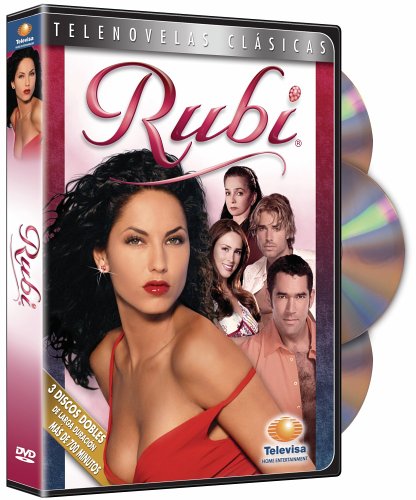
Rubi

Rubi is an ambitious young woman, who all her life wanted to become rich. She studies in a private university, where she meets sweet and rich Maribel, and becomes her friend. Rubi is the only friend of Maribel, who doesn't know that she wants to be her friend only because of her money. When Hector, a young and handsome architect with whom Maribel had been chatting on the Internet arrives at Mexico, Rubi meets his friend, Alejandro. Alejandro and Rubi immediately fall in love. Hector proposes to Maribel and she accepts. When Rubi finds out that Alejandro isn't rich as she thought, she decides to break up with him and do everything in order to marry rich Hector, and finally get the life she always dreamed of.
Customer Review: The edition is good, but the music is so boring.
The soap opera Rubi started so good, it was so quickly that in every episode you can see something exciting, unfortunately, with the huge succes of the soap opera Televisa ordered more episodes and there's when we had the problem, When we start to see the beginning of the end: the illness of Hector (then alejandro operates him but because of Rubi he let him die accidentaly). Instead of that, magically Hector gets healed, he gets a lover (Yadhira Carrillo), Rubi meet the Count (Manuel Landeta) and Alejandro have a lot of trouble in the hospital because of some fraudulent things. That part of the story is not as cool as the first episodes, they cut A LOT of secondary characters that actually their story wasn't interesting. That's why i think is a very good edition.... EXCEPT: For the music, the main theme (La descarada) was so goood, this new one is pathetic, and the score was also incredible, but especially the song from the dramatic moments. (In the special episode you can hear it in some of the dramatic moments, for example Sonia's death, when Rubi runs to the beach with her wedding dress, when Maribel watch Rubi at the airport with Hector, etc, etc. Instead of that good song they use a very boring theme, it doesn't transmitt the same emotion and tension. Hope we can see a new version of the dvd but with the real music and with more scenes and extras. By the way the extras are very cool, the finale of the original series in black and white, the special of rubi's niece, the press conference of Rubi, the only missed the original trailers (THEY'RE SO COOL, check them out on youtube)
Customer Review: rubi 2
i'm wondering if they ever going to do part 2 where her neice is twice as free spirited and dangerous lol


Those who are young or relatively new to the HipHop culture don't realize that Rap Music has many different genres:

East Coast: The East Coast, most notably New York City, was the genesis for rap music hitting the mainstream. Run-D.M.C. led the pack, with Rakim and Big Daddy Kane also breaking through to make rap emerge as a national phenomenon.

West Coast: While HipHop was cooking in the East, West Coast rap music gained national recognition in the mid-1980s with performers like Ice T and Too $hort.

Dirty South: While most of the music world's attention focused on rap coming from New York and Los Angeles, HipHop artists in the South were turning to independent music labels to release their work. Geographically, the Dirty South genre encompassed places as diverse as Houston, Birmingham, and Miami, and was greatly influenced by Ghetto Mafia in the mid-1990s. Musically, Dirty South rap is known for is danceabilty and rhythmic delivery.

Gangsta Rap: Some say Gangsta Rap first emerged on the West Coast with N.W.A.'s "Straight Outta Compton" release, while others credit Ice T with taking Gangsta Rap to national acclaim. Characterized by lyrics glamorizing elements of a criminal lifestyle, violence, promiscuity, misogyny, and materialism, Gangsta Rap's controversy came to a head with the murder of the West Coast Tupcac Shakur in 1996, and the subsequent murder of the East Coast's The Notorious B.I.G. in 1997.

Pop Rap: Known for its widespread, mainstream appeal, Pop Rap's first breakout star was LL Cool J. The Fresh Prince and MC Hammer quickly rose to the top of the Pop Rap scene and the music charts with lyrics that were less controversial than those of the Gangsta Rap genre, and thus were more likely to receive radio airplay.

Christian Rap: While HipHop was garnering a reputation for less than savory lyrics and artists for questionable activities, other artists were expressing their faith through HipHop. Christian Rap took off in the late 1980s and early 1990s with rap groups like P.I.D. and S.F.C.

Jazz Rap: Although Jazz Rap has never enjoyed mainstream commercial success, the genre often incorporates Afrocentric and political themes. Gang Starr and Gil Scott-Heron are often cited as two of the first Jazz rappers.

Conscious HipHop: Similar to Jazz Rap, Conscious HipHop has never enjoyed mass commercial success. With an emphasis on social issues, Conscious HipHop isn't overtly political, but rather deals with issues such as poverty and religion.

Electro HipHop: A combination of dance music and rap, Electro HipHop first emerged in the 1980s on the West Coast from artists like Arabian Prince and Egyptian Lover. By the mid-1990s, Electro HipHop had pretty much run its course.

Chris Robertson is an author of Majon International, one of the worlds MOST popular internet marketing companies on the web. Learn more about Rap Music: History and Genres or Majon's Music directory.

latin music download

Con Mucha Potencia


Latin American Music and Dance form a big part of Latin American culture. The ones that have got us Kiwis excited the most are Salsa, Merengue and Tango. Most Latin bands play a mixture of Salsa and Merengue when performing at Latin clubs around New Zealand. Tango seems to take a back seat and evenings usually start with Tango before the bands arrive. You will also find a bit of Cha Cha happening at the clubs, with the most popular song being "Let's Get Loud"! Most cities in New Zealand have adopted these dances as their own with training institutes and Latin clubs emerging everywhere. On the other hand, at the events you will also see a bit of Rueda with anything from 10 to 50 dancers in the circle.

As the population of dancers taking up Latin Americal dancing is increasing, other variations such as Mambo, Bachata, Cumbia, Rumba. Every now and then, there is an event that has a Bateria followed by Samba all round. Most Brazilian events in Wellington are organised by the guys at Wellington Batucada.

Having said that, Salsa is still the crowd pleaser. Cuban Style Salsa is more popular in New Zealand clubs, although Linear style is gaining in popularity. However, the best dancers seem to save their Linear moves for competitions and performances. With more and more Kiwi dancers getting into in, it shouldn't be long before we start seeing council organised events meant for hundreds of dancers. The new Waitangi Park in Wellington would be a perfect location for a community event of this kind.

Article taken from Latinos.co.nz (http://www.latinos.co.nz)

latin music com

Parachutes


Well I know we all have an iPod and those of us who don't probably been wishing one, really the popularity of this little gadget is huge and the thing about is that it just keeps getting smaller and bigger at the same time. Well what I mean, how can it be both? Well Apple seems to make the ipods smaller with each generation but holding much more music and movies and is one of really great things about the ipods which I believe has contributed significantly to it's success in the mp3 player market and amongst users.

With all these Gigabytes of space what are you going to do with it? Well don't be like me who probably had about 1 or 2 on an 80GB iPod. Well that recently changed what been holding me off for sometime was the fact that iTunes charges so much for a song I mean come on, 99 cents sound like small amount but think about it to fill up a 80GB would take approximately over 20 thousand song or more and at 99 cents that really going to hurt your pocket, for this reason many ipod owners have been looking for free ipod downloads, if there really is such a thing.

There must some other alternative to this task, of getting music and movies downloads for your ipod, there other music sources such as yahoo music and rhapsody but these operate the same way as iTunes so that does make any sense it like one step forward and 2 steps back. Then there is your own cd collection which is a great source of music and not just music but music you like since you bought in the first place :) . For free ipod downloads, I personally recommend you to start with this option get you own cd collection and put the music onto your ipod, but that is not enough with the music industry changing and releasing new songs almost every week how are you going to keep up with it all without going broke.

Well then we have to continue to look for more alternatives. Well let me think for while... I was going over the net looking for the popular free ipod download sites, and I and notice there are some download site that offer unlimited downloads for music and movies, but really in this digital age that we live in is there really such a thing as free music and movie downloads. Yes amazingly yes! You can still get free ipod music and movies, in a sense you see these are all free as they are no per download fees like iTunes.

Let me explain how it works. You see these sites operate on a Membership basis what that means is instead of paying for each song you download. You pay a one-time membership which provides you with access. Don't panic the membership fees are generally small ranging from $29 to about $50 dollars. After joining you are provided with instant downloading access. How this works is that the site will allow you to get access to their downloading program and you can use this to search for songs and movies and download to your computer or mac then transfer them to your ipod. The process is very simple and it sure bets paying 99 cents each time you want to download. With all that said start building your ipod music and movie dream collection today.

More details on iPod, iPhone and iPod Touch Music and Movie Downloads
http://www.ipodmediadownload.com

dance music charts

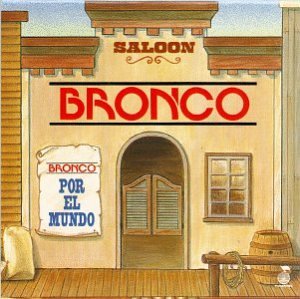
Por el Mundo

Customer Review: POR EL MUNDO IS A GREAT CD!
What can I say I LOVE THIS CD! But whats so good about it well number 1 I love the lead singers voice (Jose Guadalupe). To me he has a voice to kill for but thats just my opinion you might think diferently. But as far as i'm concerned i think this is a super album to buy cause every song on here is so good my personal favorite well... it would have to be number 3 (Aqui No Mas.) I just love that song I can not explain the feeling I get when I hear this song it makes me feel so good inside not to metion like I want to dance. but the song (Espinas) is good to hey there all good thats why I think you should buy this cd you will love it if you like banda musica like I do. Look i'm going to be honest with you I would never tell someone to buy a cd I never herd or thought was not a good cd to buy thats how I am but everybody has different taste in musica so u may like it may not but I know I love it and i'm so glad i bought it I would never get rid of it. Even though it is an old album of theres I still listen to it to this day thats how much I love this cd it was one of the best investments i ever made. I am a musica freak and I love mexican musica and and if you do to buy this cd.


Friday Night, Week Before Christmas, 1999

This night I arrived a little before the crowd, just minutes before the tables with stools near the small dance floor were taken. Harvelle's, a popular Santa Monica night spot which draws an upscale crowd, is known as "The Home of the Blues, R&B, Funk, and Rock" with live music and dancing every night. With its no-smoking environment and sounds for both the ears and the feet, it is a pleasant place to spend an evening. I go for the listening and the dancing.

After enjoying a dance with a young man, I wove my way back through newly arrived patrons to my carefully chosen seat. After a sip of my Pellegrino, I felt compelled to return to the edge of the dance floor. My rational thought was to take my turn with one of the regulars, John, a trained dancer who arrived some twenty minutes earlier. I noticed him and a man I had not seen before -- both the same vintage, about 50, and the same height, about 5'8", but John as light as and the unknown man as heavy as that frame can hold.

John changed partners on the dance floor, so I made eye contact with this other man who, like John, had been dancing with a variety of partners since his arrival. We danced and exchanged pleasantries. We laughed. We smiled. I noticed that his flesh tone was similar to mine, light and peachy; his eyes as intense as my own blue eyes, but brown. It was obvious that he loved to dance. He led adeptly; I followed easily. In the middle of our dance, he commented, "You'll probably need to take your jacket off because you'll get warm." I smiled, knowing that likely I would very soon peel it off, but for the time being the fan above the dance floor was keeping me cool.

At the end of the dance, I turned toward the band to acknowledge the musicians with my applause. When I turned my focus back to my partner, I saw that he was no longer standing beside me, but was face down on the floor. The other dancers and I assumed he was joking. But not so. The band stopped. Time stopped. This time held all eternity -- a time that can be long or short by the clock. Someone called for help while six of us (including staff, John, and a patron who is a registered nurse) said encouraging words and touched him. I allowed others to attend to him on a physical basis, and focused my attention at another level.

I put my hand on his back and asked silently "Are you going to die?" to which came the answer: "It is time." My thoughts raced with a series of follow-up questions: "Time for what? Time to live? Time to die? Time to dance?" I reminded myself to breathe. My impulse "to do" something shifted back to the consciousness "to be" with this moment. I recognized that to be a non-anxious presence was more important now than any action I might take. My inner guidance confirmed that his spirit was very much alive, but was no longer in his body. I felt his spiritual presence more strongly than I had earlier. My fearlessness of physical death and my previous experiences of observing the process of transition from physical to nonphysical anchored me in blessing the richness of this moment.

Words of encouragement and gentle touches came to this man on the floor from those in the inner circle; those in the outer circles bore witness to the event. Drawn together for entertainment in this intimate space, we found ourselves joined by the invisible web of human kindness with varied reflections and perspectives on life and death.

In the muted sounds of the club, I picked up odds and ends of information. Echoed through the room was the knowledge that no one present knew this man's name. Staff confirmed to each other that he was not drinking. A gold ring on his left hand announced he was married. In the absence of facts, I speculated on his circumstances. Perhaps he was an out-of-town business person unwilling to fight the Friday night outbound traffic at LAX. Perhaps he lived in Chicago or Boston, with a wife and children not expecting him home until sometime the next day. A staff member tapped me on the shoulder, bringing me out of my speculation, and signaled that I was to move aside for the police and paramedics. I slipped back into linear time and realized that, by the clock, their arrival was swift.

I moved to the outer circle, but not for long. The staff pointed me out to a police officer who asked for my identification. In my tiny purse I carried only my keys, my driver's license, and some cash. I learned from the early morning jogging club the importance of carrying identification when going out to walk or run, just in case...... Going to a bar or buying wine, of course, I carry my picture ID for that added hope that I will get carded. This current scenario was one that I had not imagined as reason to carry proof of identity.

I followed the police officer who carried my license in his hands. He was young, handsome, gentle, and empathetic. Unhurried, he copied the information from my card, asking me to confirm that each bit was still correct. Harvelle's staff also took my name and telephone number.

As the paramedics performed their duties, the patrons continued to keep a respectful vigil. Although I knew this man's body no longer held his spirit, the attendants kept massaging his heart as they carried him away. Perhaps they did not want to announce the finality to the Friday night crowd or perhaps they did not want to give up hope or perhaps they were following predetermined procedures.

When the band returned to make their sounds, I vacillated between staying and leaving. To stay and dance felt more honoring of the happenings; to leave too soon seemed to discount the evening's events. The crowd was expanded rather than diminished. I danced with John and waited until the end of the set to leave, about midnight. Outside the club, the bouncer (a 300 pound hunk) said he had something for me: three passes for my next visit to Harvelle's. I smiled at the graciousness in the hands that hold such physical strength. My only words "thank you" were transmitted through the wordless energy field of our shared experience.

Two Days Later, Sunday

While walking on Santa Monica's Third Street Promenade, I found myself face to face with a police officer handing me a candy cane. He noted my hesitancy to take the candy and said with gentle authority that I had to take it. I acquiesced with a playful smile that matched his, and offered a bargain: I would take it in exchange for some information. I told him that I was at Harvelle's on Friday. He stopped any need for further explanation when he revealed that he was on dispatch that night. I asked how I could make it known that I was available to speak with the man's wife or anyone else in the family, if they desired. I identified myself as the last one dancing with him, that my name and contact information were part of the police record.

Home for five minutes, the owner of Harvelle's telephoned to ask me to call the family. This nameless man and his wife, whom I had been carrying in my heart for two days, now had names: Jim and Victoria. Not from out of town, they lived locally. A friend handling phone calls told me Victoria would return my call the next day.

The Next Day, Monday

Victoria and I spoke for an hour by phone in a remarkable dialogue. She confirmed that she and Jim love/loved to dance. She kept correcting her language, changing references to Jim to the past tense rather than the present tense which had become so familiar in their 18-year marriage. Friday night Victoria had to work (she is an emergency room physician) so Jim went without her to scout Harvelle's for a future visit together. Their other dance buddies had planned to go with him, but in the end Jim went without anyone who knew him.

I shared with Victoria every detail I could recall from that night; she reciprocated by confirming information about Jim that I had intuited. Jim and Victoria had a son and daughter, ages 8 and 10. He had several physical conditions which prompted him to decide to dance to maintain his health. In addition, he created a contract with the Universe that he not live any part of his life as an invalid. He was active to the last moment. He was totally alive until he died.

I was touched by her words as she thanked me for being an angel for Jim and for holding a space of calmness during the event. It took a while following our conversation for me to synthesize all that we verbalized, though I was left with no doubt that Jim knew he was going to die that night.

I declined to attend Jim's memorial service on the next day because I had a client scheduled in a time slot that would make it impossible. Later when the client cancelled, I knew where I was supposed to be.

The Next Day, Tuesday

The synagogue was filled with those who loved and cherished Jim. They were not there in perfunctory attendance. Before I could spot someone I thought might be Victoria, a comely woman approached me, commenting that I was standing alone. I explained that I knew no one there, identifying myself as "the woman who was the last to dance with Jim." She embraced me warmly as she introduced herself as Jim's mother. A brief interchange indicated that Victoria had already conveyed much of our conversation. As I approached Victoria, pointed out by Jim's mother, our eyes meet and she asked "Are you Jeanie?"

At the memorial service, I heard stories of Jim's capacity to love, ability to inspire, and the expansiveness of his soul. I contemplated the enigma that he left this physical life in a place where nobody knew him on this earth plane. With so many close friends and family members, he chose strangers to be with him in the end of this life. I believe Jim would appreciate and even encourage us to speculate on this situation, a mystery that sweetens his memory.

Today

Jim's story has not ended simply because he no longer uses a body that is familiar to family and friends. He has touched many persons in his life and in his death: those he knew and those he did not know by name.

It was a special honor to be present, to be a witness to his passage, and to dance with Jim his last dance.

Copyright 2006 Marshall House Jeanie Marshall, Empowerment Consultant and Coach with Marshall House, produces Guided Meditations on CD albums and MP3 downloads and writes extensively on subjects related to personal development and empowerment.Voice of Jeanie Marshall, http://www.jmvoice.com

dance music charts

The Future is Unwritten-DVD Documentary

Julien Temple, one of the early documentarians of the London punk scene and director of the 2000 Sex Pistols film The Filth and the Fury, turns his attention now to that other seminal British band: The Clash--or more accurately, to the band's co-founder, lyricist, rhythm guitarist and lead singer, Joe Strummer. The Future is Unwritten is more than just a biography of Strummer; it is a tribute and exploration of a musician, artist and devoted humanist. Though Temple respects and admires Strummer (his influence is exalted by close friends, peers and fans like Bono and John Cusack), he doesn't romanticize this larger-than-life personality and presents Strummer honestly and not always in flattering light, though the director's fondness for his subject is constant. Most movingly, Strummer himself provides the narration via reassembled excerpts from a variety of interviews and the BBC radio show he hosted during the nineties. In the wrong hands, this could be contrived, but in this masterful documentary it serves as a testament to not just Joe Strummer the myth, but Joe Strummer the man, telling us his story in vivid detail. The Future is Unwritten is a moving and personal portrait of a musician who helped shaped not just punk, but modern music as a whole. --Kira Canny
Customer Review: Amazing movie about a rock legend
There have been several movies made about Joe Strummer but Julien Temple's is unique in its personal touch. Temple was a friend of Strummer's for many years and so had insight into the man behind the music that many people did not have. The movie consists of Joe's life story as told by many friends, acquaintances, fellow artists and others who knew him or were influenced by him over the years. Amazing music, very well put-together, and just a great story about a man who was a huge influence on rock & roll and politics during his time on this earth. Joe was taken from the world too early when he died unexpectedly in December 2002 and after watching this movie one can only wonder what more he would have accomplished. The opening scene of Joe singing "White Riot" a capella in the studio is complemented by the closing scene of Joe and Mick Jones reuniting on stage 20+ years later to perform the same song...even though they were old (and Mick a little bald!) they still ROCKED. If you like the Clash, you must see this movie!!


As with any competition Kimmie is involved in, I usually don't watch until after I've read about the results; or I can fast forward my "Tivo" to the scores to see her standings. Then I decide how to watch that particular event. But this competition was unusual, I had no choice but to endure the anticipation of being in the crowd; part of it. However, it was still too nerve wrecking to watch.

Kimmie was the last to skate. Once she had performed, she sat patiently awaiting her scores. However, her body language spelled anticipation; meanwhile, the commentators, while the viewers and the audience were on an edge, felt compelled to comment on Kimmie's past performances, from the good ones to her recent "disasters." Soon everyone stood, wondering what was taking so long; I heard some people say that they were tabulating the scores, while others said they were counting her jumps. This part alone should have told me something was strange because this is not the norm.

A reporter came to the crowd speaking on behalf of Kimmie, proudly saying how he knew she had it in her, when another one of Kimmie's fans pulled out a recent article written by this fellow discrediting Kimmie. Anticipation had kept me from watching Kimmie's actual performance. It meant too much. However, my gut reaction was that she had won! I started to dance around, some people chanted with me, others clapped. While some glared. The scores had not come out yet. However, there was this feeling in me that she had won! After all she is a winner!

Soon after the party had simmered down, there was a disquiet in the large arena; Kimmie was being interviewed. She had regained her "World Title." It was exhilarating.

http://thetripleaxel.blogspot.com

latin music download